Emergency rescue buoy
Ok, so going completely untethered for the first time was a big thing for us. For the first three years we had a 20m long slim ethernet tether bundled together with some foam string to make it buoyant. Pretty crude but we were too cheap for a proper setup since this was only a temporary solution. This took care of communications to and from Ålen, as well as the ever so often fails that happen where you instead need to use the tether as a safety line. Equally as important I would say.
The fourth year we had installed a 4G modem so we could send commands when on the surface. But then we didn’t have anything to pull on when things went bad, so we hooked on a fishing rod with 300 meters of 40kg line as a backup. This worked to some degree, but we tangled the line in the propeller several times, even burning the motors twice. It was not a great solution and we were not going to navigate around this islet with strings attached, that was for sure. We needed to come up with another solution.
So we made an entire document about potential failure modes and scenarios and pros and cons for different solutions. It will be too long to cover everything.
But basically we saw two options. Drop weights or emergency buoy. The reason why we opted for the buoy was mainly due to the fact that we wanted to be able to test the AUV in the spring without immediate access to a boat. And ofcourse the relatively shallow waters.
Our thinking was that if there is a catastrophic failure and the AUV sinks to the bottom, there are two scenarios: (completely lacking nuances and very roughly stated, but anyways…)
-
The AUV drops its weights and slowly comes up to the surface. All electronics are now wet, function is unclear, but at least the AUV floats around on the surface, bobbing around in the direction of the wind. But we got no boat to pick it up.
-
The AUV triggers a mechanism that ejects the self-contained buoy. The buoy, carrying a spool of fishing line, floats up to the surface. Lights start blinking, GNSS data is received and relayed via radio back to shore. The AUV is now acting as an ancor on the sea floor, physically connected via a line to the buoy on the surface. We note the location, make some phone calls and try to get someone with a boat out to the buoy the following day for a recovery.

As I said, there are so many nuances to this, safeguards that can be designed if using one or the other system, other scenarios ect. But ultimately, this is what we went with.
Again, we (or I, since I’m the hardware guy of the bunch) got to design some fun mechanisms. The release mechanism is based on the mechanism used for quick releases. It’s essentially an “over center mechanism” that needs very little force to trigger a larger load.
This was necessary since we wanted to use a magnet attached to a servo inside the buoy’s WTC to trigger the release and eject mechanism attached to Ålen.
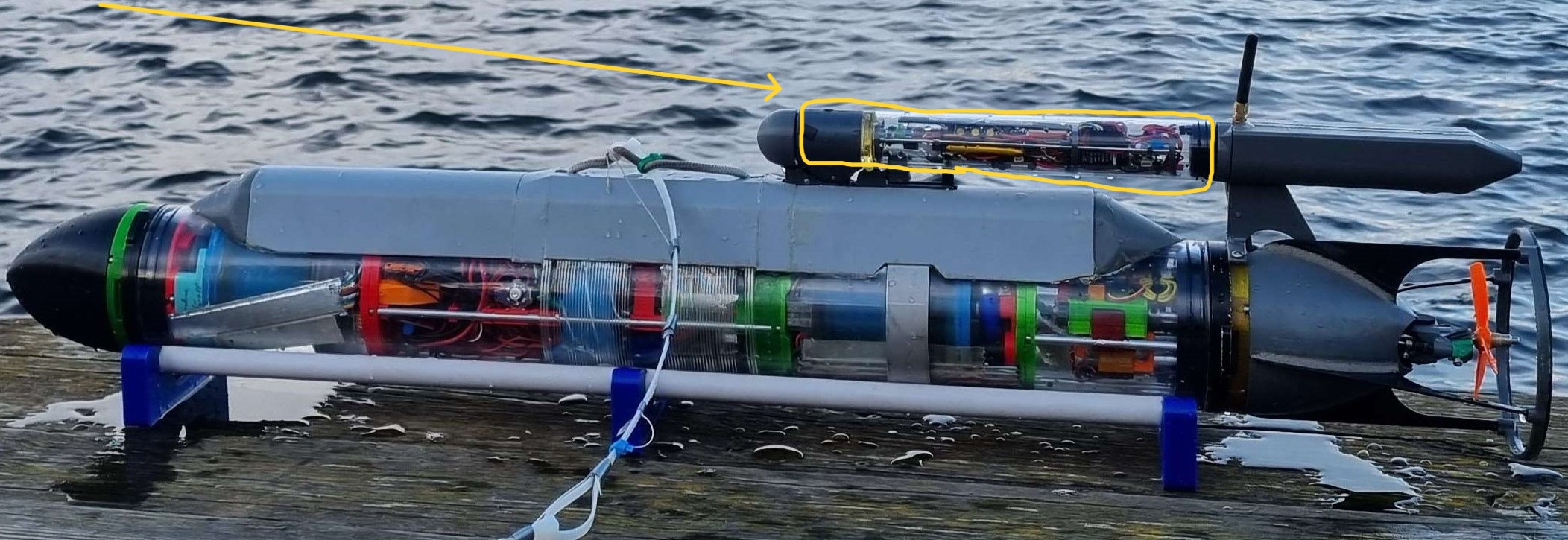
Inside the emergency buoy is an arduino MKRWAN1310 with a LoRa module for communication, a GNSS receiver, a servo, a battery and some LEDs. It is set to trigger if the GNSS receiver doesn’t get a satellite fix in 5 minutes. For this reason, during the run around the island, our longest dive was just under 2 minutes.
The range of the LoRa communication was tested to at least 1 km with the buoy floating really low in the water and in line of sight to the receiver. This was going to be good enough for us.
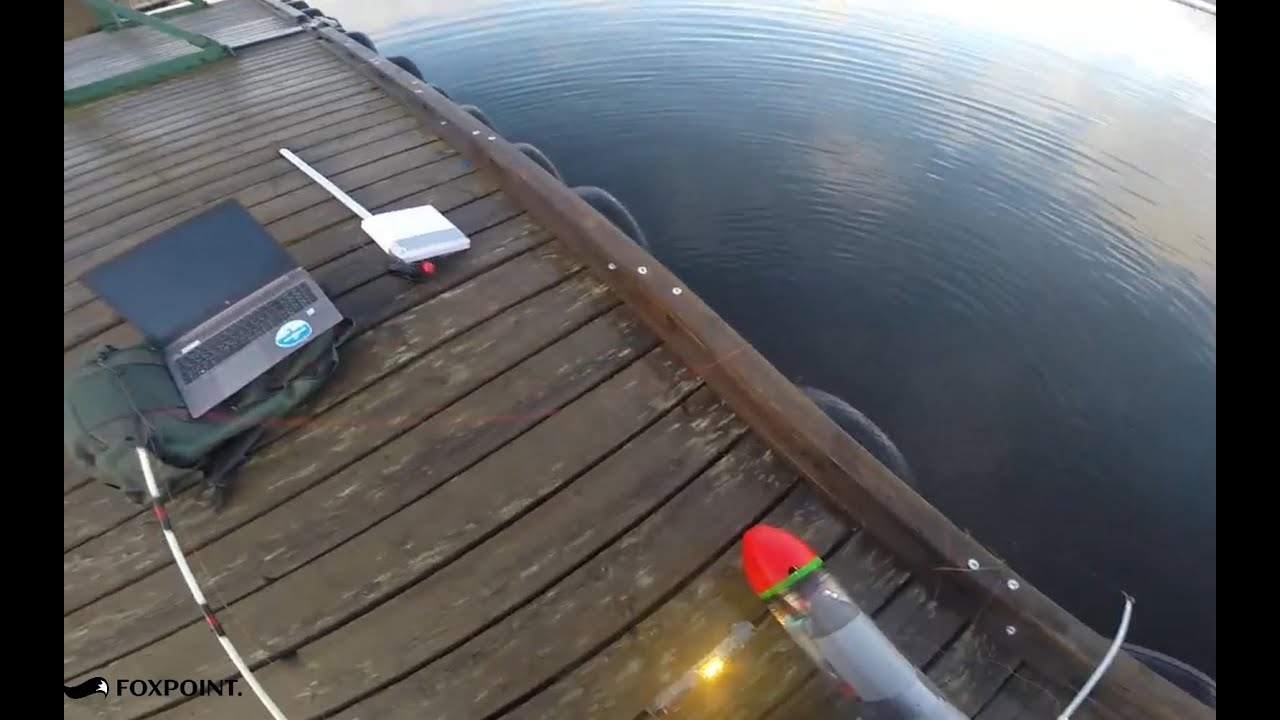
Here is another video of testing the system. We did do successful tests down to 20 meters which would be around the max depth of the island run. The spool was loaded with 30 meters of line.
In the future, I hope to get into electronics some more, because it’s so much fun. The buoy won’t be separate modules connected by wires then, but instead integrated on a circuit board. This way the buoy can be made sooo much smaller. Now it’s more like the space shuttle piggyback on a 747 
Cheers!