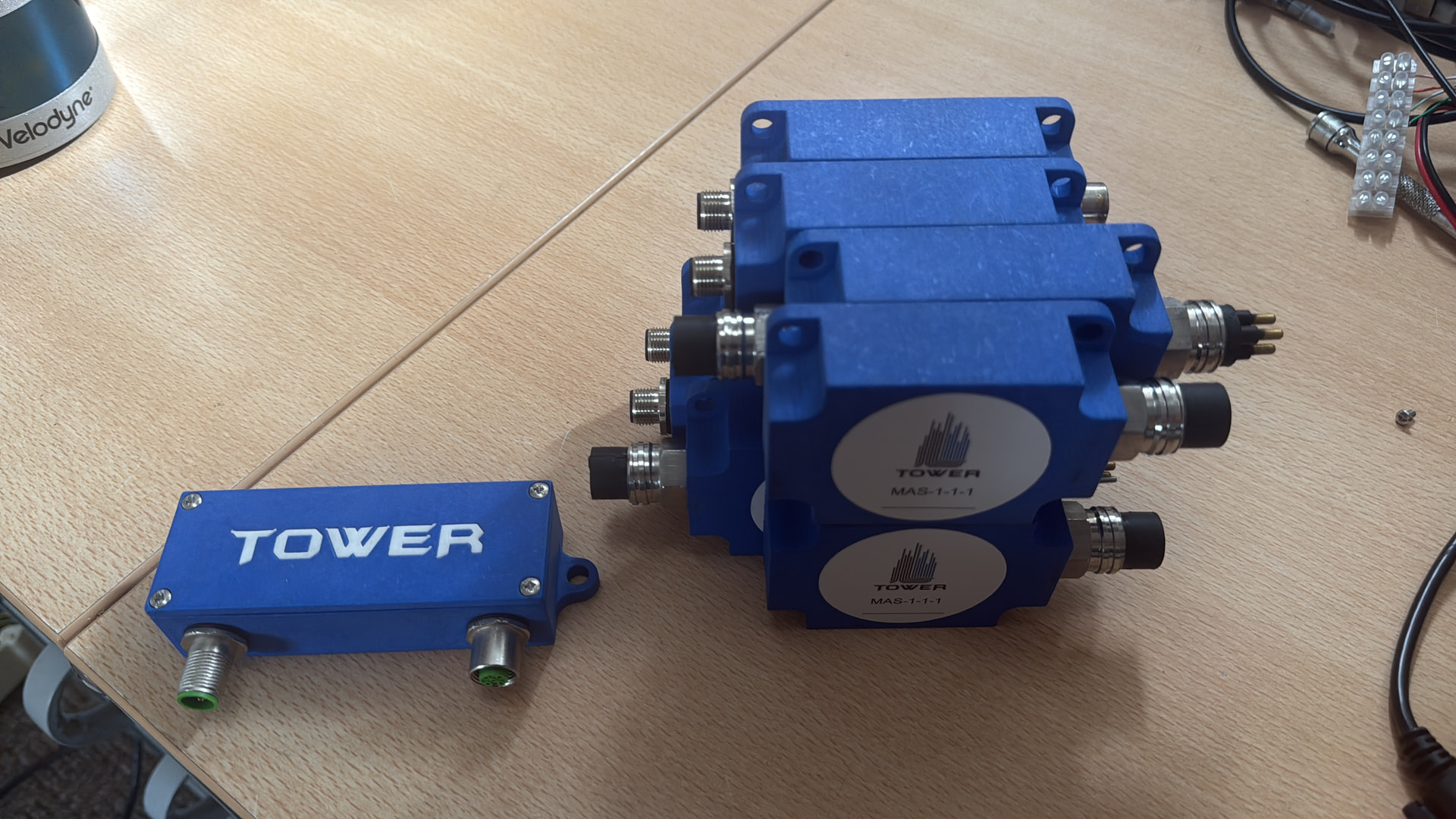
For a design project at my university, I need to make a water sampler that takes water samples from the surface down the bottom. I want to 3d print a hydrodynamic shape for the outside of the sampler to reduce the drag but I am worried at max depth (110 ft), the 3d printed shell on the outside will explode. Is there rule of thumb materials, wall thickness, or design strategies to prevent this?
I anticipate using a BR watertight box to hold electronics and sealing my electronic ball valves with epoxy to make them waterproof, so water ingress is not a problem
Hi @tedman -
As a general rule, 3D printed parts aren’t good at holding any pressure, water or air! This is because the layers don’t have the strongest bonding between them, vs. a solid plastic part. It’s possible for 3D prints to remain fully functional at full ocean depth however, because they simply flood, filling their internal infill with water!
A hydrodynamic shell for your sampler should be fine - it may become a bit water-logged after use, but won’t lose any strength.
If however you’re trying to create a depth-rated 3D printed part, which will have 110’ of water pressure trying to get inside of it… I wouldn’t expect this to work, even with surface coatings of 2 part epoxy. Maybe 1-15 feet would be possible?
I’d also put very little confidence in epoxy to waterproof anything - it can work in the short term, but at extreme pressures and with time, it always fails… o-rings always work!
Maybe if you put your valves inside your enclosure, and routed (rigid) tubing thru (drilled out) WetLink Penetrators to them, you could accomplish your goals?
How pure do the samples need to be? If a little contamination from surface water is ok, you should be able to use a common plastic syringe, which you fill with water at the surface (to avoid a pressure differential), then at the bottom you press that water out and pull in new water. That way only the material itself needs to withstand the pressure, and your design focus can be on the mechanism to open and close it (e.g. perhaps with some kind of rack and pinion, and a depth-rated servo motor).
If sample purity is more of a concern you could fill it with distilled water at the top, or some pre-calibrated solution, it’s just less convenient to do so.
The recommended design strategy would be to print solid material - ie reduce material by making holes through the design, rather than using a non-full infill. Holes don’t need to be very big to let the water in, and mostly-trapped water is unlikely to have much impact on the hydrodynamics.
Ideally you would use a material that’s not particularly hygroscopic, to avoid excessive stresses from volumetric expansion, but how relevant that is depends on how many times the product needs to be used, and how loose you can make the tolerances while still achieving your design goals.
Hi Theodore, this is something I’ve been working on for awhile too! I have a X1C printer and a 500 PSI pressure chamber here and have done lots of experiments with this.
There are two parts to this problem, the materials yield strength (mechanical problem), and the coating can’t have any leaks (process problem). typically, if I managed to get the coating on without any small holes (I’ve found the best success with epoxy so far) the parts will eventually yield as pressure increases, and when the parts bend the epoxy cracks and they flood. the solutions is parts that don’t bend under load, and a coating that can be applied without holes.
wall thickness doesn’t seem to matter much, I’ve tried 1-3 walls all with similar results. infill makes a huge difference. I’ve used gyroid for everything, assuming a perfect coating, 5% infill fails around 100 PSI (70m), 15% 400 PSI (280m), and 25% exceeded the 500 PSI of my pressure tank. I’ll add that your geometry and layer direction matter a lot, so test often. All of this was done with regular PLA. I also tried carbon fiber PLA, while it took more pressure to yield, it still failed. Polycarbonate at a 15% infill lasted almost 24 hours at 500 PSI before it imploded.
it’s worth noting that these were pressure tests, not time at pressure tests, or pressure cycle tests. these things would all play a role in any product development.
I’ve only used FDM printing, but here is a paper that used SLA printing with a lot of success.
I have used SLS and MJF 3D printing on my subsea sensors for about 5 years and they regularly go down to 30m with no problems. For the internals I have either put them in Epoxy or have them in an inert Mineral oil to reduce pressure on the enclosure. Just have to ensure you have them printed with no voids in the body.
Last year, we built a vehicle using 3D-printed parts. To be honest, it turned out pretty bad. We tried coating all the 3D-printed surfaces with epoxy—actually not just epoxy—and we still had leakage problems, even though the pressure was very low. After the epoxy, we also tried coating it with Flex Seal, and that gave us the best results. However, it still failed in the end, because 3D printing creates layer-by-layer structures, and once water finds a pathway through the layers, the entire vehicle is compromised.
If you have any questions, feel free to send me a message.
@tedman, This is an ongoing research field. A few years ago at a conference I saw some work done on SLA by FIT. Having done lots of FDM and SLA myself, I can say SLA layer to layer bonding is so much better than FDM. My biggest concern has been sealing the enclosure repeatedly and safely the electronics.
From your original question, it seems the 3D print is only for hydrodynamic. In this case I don’t think it would matter the material as long as it’s solid (100% infill) or that is has a way for the water to enter the “hollow” interior. PLA, ABS, ASA, might compress a little bit but should not deform enough to get damaged. My biggest concern is with PLA. It has issues when humidity enters it. Also UV light makes it brittle and if you leave it too long in the sun it could melt. Most of our prints are ASA now days.